FRONTIZA Logo
Apply KYC

Frontiza Insights!

Clear, expert insights on mutual funds, stocks, insurance and more, to help you invest smarter and grow your wealth with confidence.
Economy

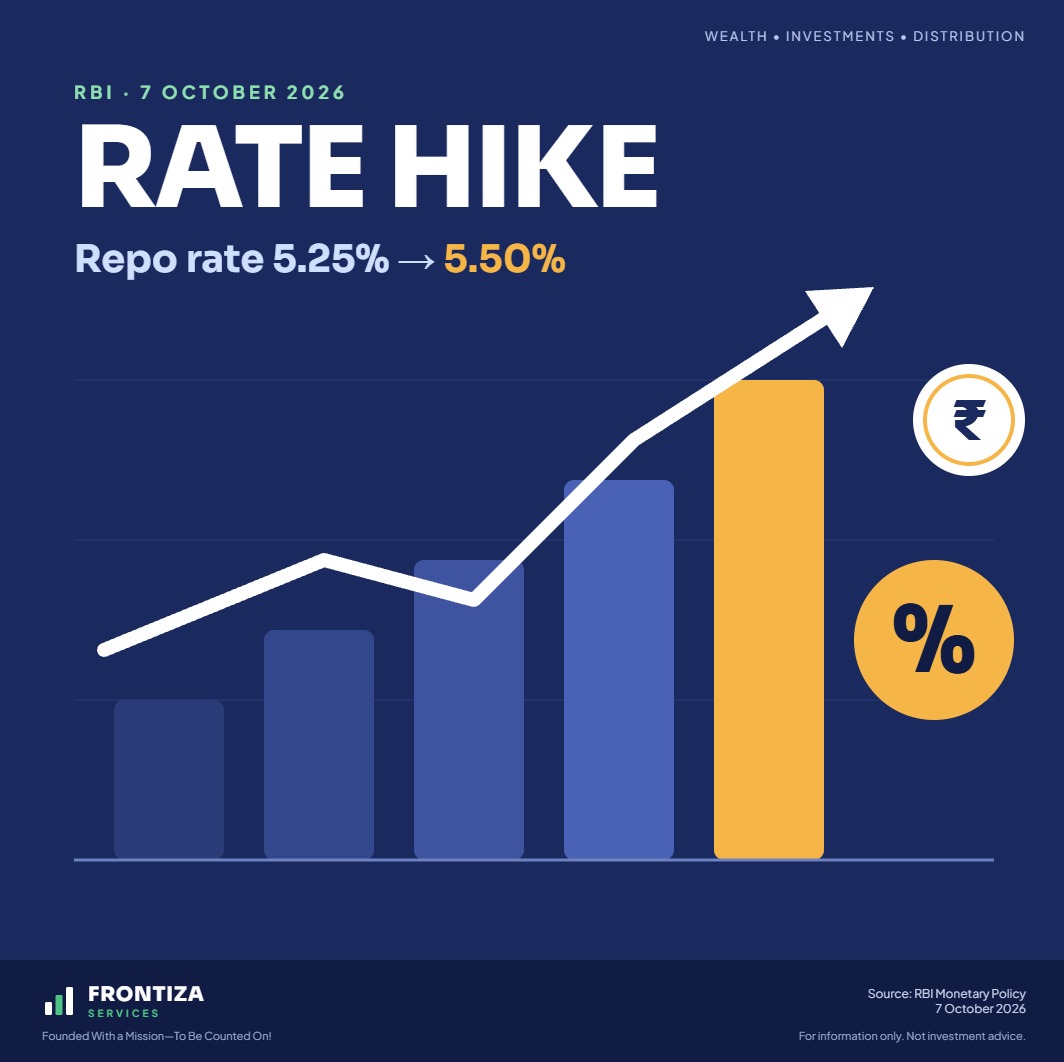
RBI raised the repo rate from 5.25% to 5.5%. It's the first hike since February 2023. All six MPC members voted for it, and the stance shifted to "calibrated tightening" because inflation pressures are spreading across the economy .

Why the RBI had a case

  • Inflation is spreading. Some forecasts put September inflation as high as 5.5%, above the 4% target. The RBI is worried that the oil shock is now pushing up prices more broadly ("second-round effects").
  • Growth can absorb it. GDP grew 7.8% last quarter, and the RBI still projects 7.1% for FY27. With growth that strong, now is a good time to tighten; waiting until inflation is entrenched usually means bigger hikes later.
  • It's a small step. Rates are still 1% below where they were before the 125 bp of cuts in 2025. Real rates are barely positive, so this is a modest hike, not aggressive tightening.
  • It protects the rupee. Higher rates help keep foreign money in Indian bonds while oil is putting pressure on the currency.

Why critics think it's a mistake

  • The inflation is mostly imported. It comes from oil and supply shocks, and higher Indian interest rates can't bring global crude prices down. A rate hike mainly squeezes demand, not supply.
  • Growth risk: if West Asia tensions ease and oil falls, the hike will look premature and could slow credit, housing and consumption just as investment was picking up.
  • It reverses course fast. The RBI was cutting rates until December 2025. A quick U-turn hurts the credibility of its guidance.

Our Take:

A single 25 bp hike while growth is near 8% is reasonable insurance against inflation. The real risk is the RBI going too far. Goldman and HSBC expect another hike in December, and if oil prices ease, two hikes might be overkill. The Governor has said the size and length of any hiking cycle will depend on inflation data, so the September and October inflation numbers are what to watch.

What it means for investors 

  • Opportunity for FDs: deposit rates will start rising. This is a good time to pitch FDs and short-duration debt funds to conservative clients.
  • Under some pressure: rate-sensitive stocks such as real estate (DLF, Anant Raj), NBFCs (Bajaj Finance, Jio Financial), and autos.
  • Relatively fine: banks, since loan yields reset faster than deposit costs, and cash-rich FMCG companies.
  • Debt mutual funds: avoid long-duration funds for now, because bond prices fall when rates rise.

Oct 07, 2026 9 times read

Search Articles

Weekly Financial Blueprint

Get curated market updates, tax updates, and regulatory shifts delivered directly to your inbox.

✓

Enquiry Status